NDIS Knowledge Base
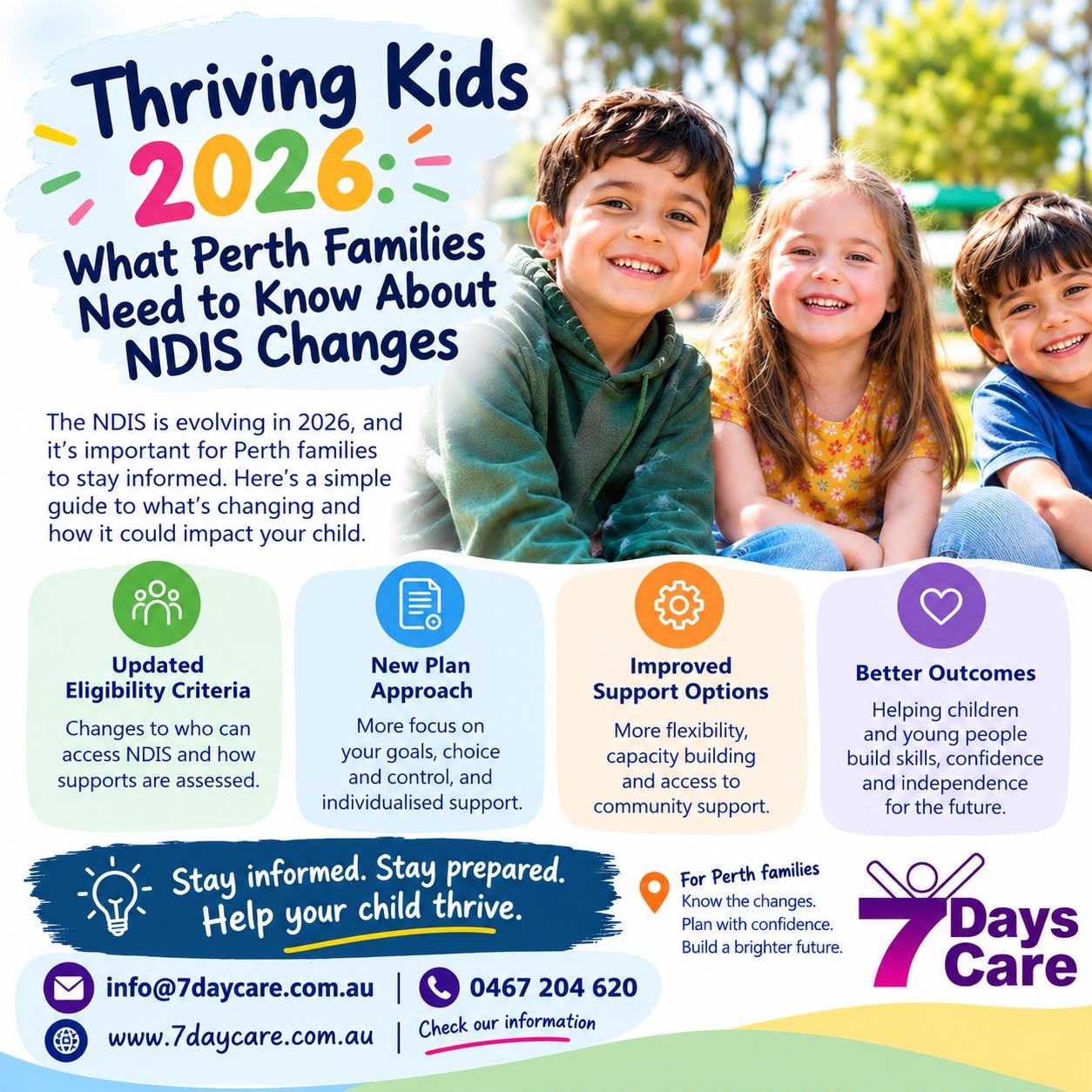
Thriving Kids 2026: What Perth Families Need to Know About NDIS Changes
Published by 7 Days Care WA
Families raising children with developmental concerns often have questions about early intervention, autism support, developmental delay and the National Disability Insurance Scheme (NDIS). In 2026, a new Australian initiative called Thriving Kids is beginning to change how some young children and their families access support.
For families in Perth and across Western Australia, understanding this program is an important step towards finding appropriate services and making informed decisions about their child’s development.
In this guide, we explain what Thriving Kids is, who it is designed to support, when services are becoming available in WA, how it relates to the NDIS, and where families can find reliable information.
For the latest national announcement, read the official NDIS Thriving Kids update.
What Is the Thriving Kids Program?
Thriving Kids is a national initiative designed to provide additional developmental support to children aged eight and under who have developmental delay and/or autism with low to moderate support needs.
The program aims to help families access practical guidance, early support and community-based services that encourage children to participate more fully in everyday life.
In Western Australia, the approach focuses on building family strengths, increasing community connections and supporting children’s development and participation in everyday activities.
Depending on the services available and the child’s needs, support may focus on:
- Communication and language development
- Play and social interaction
- Everyday routines and participation
- Understanding and responding to behaviour
- Learning and developmental skills
- Building parents’ and carers’ confidence
- Connecting families with relevant community services
Families do not necessarily need a formal diagnosis to seek help through WA’s Thriving Kids pathways. Eligibility and access arrangements may vary according to the specific service.
Learn more: Visit the WA Government’s official Thriving Kids page for current program information.
When Did Thriving Kids Start in Western Australia?
The first phase of Thriving Kids commenced in Western Australia on 1 October 2026.
However, this does not mean every service became available everywhere on that date. WA is introducing the program in stages, with services progressively expanding through 2027 and full implementation anticipated from January 2028.
The initial phase includes Thriving Kids Connect WA, an information, advice and navigation service designed to help families understand their options and connect with appropriate support pathways.
Families can contact the service to discuss their concerns, learn about possible support options and find out which services may be appropriate for their circumstances.
For current details, visit the official Thriving Kids Connect WA information page.
Families can also call 1300 WA KIDS (1300 925 437) for information and navigation support.
Who Is Thriving Kids Designed to Support?
Thriving Kids is intended to support children aged eight and under with developmental delay and/or autism who have low to moderate support needs, together with their parents, carers and families.
Every child develops differently. Some children may need extra help with communication, social interaction, play, learning or everyday routines. Families may also need practical strategies and guidance to support their child’s development at home and in the community.
Thriving Kids aims to help families understand these needs and find suitable support.
The program is not a one-size-fits-all solution. The services available will depend on the child’s needs, the family’s circumstances and the services operating in their area.
Children with permanent and significant disability or higher support needs can continue to be eligible for the NDIS if they meet the relevant access requirements.
Official information: Read the WA Government’s Thriving Kids overview to learn more about the program’s intended age group and approach.
How Is Thriving Kids Different from the NDIS?
Thriving Kids and the NDIS have different roles, although both aim to support children and families.
The NDIS provides individualised disability funding to eligible people with permanent and significant disability. Thriving Kids is designed to provide additional foundational and community-based support for young children with developmental delay and/or autism who have low to moderate support needs.
Here is a simple comparison:
| Thriving Kids | NDIS |
|---|---|
| Focuses on children aged eight and under with developmental delay and/or autism and low to moderate support needs | Supports eligible people with permanent and significant disability |
| Aims to provide accessible, family-focused and community-based support | Provides individualised funding for eligible disability supports |
| Services are being introduced progressively | Existing access and eligibility arrangements continue during the transition period |
| Families may seek support without necessarily having a formal diagnosis | Eligibility is assessed under NDIS access requirements |
The right pathway depends on the child’s individual needs. Families should seek advice before making decisions about applications, existing plans or support arrangements.
For the national government’s explanation of the program and its rollout, read the NDIS announcement about the first phase of Thriving Kids.
Will Thriving Kids Affect Children Already Receiving NDIS Support?
This is an important question for families.
According to the current government announcement, there will be no changes to NDIS access or eligibility under this reform until 1 January 2028.
During the transition period, children can continue to seek access to the NDIS if eligible. Families should continue to follow the usual access, plan review and reassessment arrangements that apply to their circumstances.
Children with permanent and significant disability or higher support needs will continue to be able to access the NDIS if they meet the relevant eligibility requirements.
Families should not assume that their child’s NDIS support will automatically stop because Thriving Kids has commenced.
If your child currently receives NDIS support, check official updates and speak with your child’s existing providers or support professionals before making changes to services.
Read more:Official NDIS information about the first phase of Thriving Kids.
What Support Could Families Access Through Thriving Kids?
Thriving Kids is being developed around practical, accessible support that fits into family life.
Depending on local availability and the child’s circumstances, services may include the following.
1. Information and Developmental Guidance
Parents and carers may be able to access information to better understand their child’s development, identify support options and learn practical strategies for everyday situations.
2. Communication and Social Development
Some supports may help families encourage communication, play, interaction and participation in daily activities.
3. Parenting and Family Programs
Family programs, peer support and facilitated playgroups may help parents and carers share experiences, develop confidence and connect with other families.
4. Connections to Relevant Services
Information and navigation services can help families understand which supports may be appropriate and connect with relevant professionals or community services.
5. Specialist Support Where Available
Depending on the program and local availability, support pathways may include connections to professionals such as speech pathologists, occupational therapists, physiotherapists, psychologists or social workers.
The actual services available will vary as the program expands. Families should confirm local availability and any eligibility requirements directly with the relevant service.
To learn more about the WA approach, visit the official Thriving Kids program page.
How Can Perth Families Find Thriving Kids Support?
If you live in Perth or elsewhere in Western Australia and have concerns about your child’s development, you can take the following steps.
Step 1: Identify your concerns.
Think about the areas where your child may need extra support, such as communication, play, social interaction, learning or everyday routines.
Step 2: Seek reliable information.
Start with the WA Government’s Thriving Kids information page to understand the program and its current rollout.
Step 3: Contact the information and navigation service.
Visit Thriving Kids Connect WA or call 1300 WA KIDS (1300 925 437) to learn about possible support pathways.
Step 4: Speak with a trusted professional.
A GP, community health professional, educator or existing support provider may help you understand the next steps.
Step 5: Ask about services in your area.
As the program is being introduced in stages, ask which services are currently available in your suburb and whether any referral or eligibility requirements apply.
Step 6: Review your child’s current supports.
If your child already receives NDIS funding or other services, speak with the relevant professionals before changing existing arrangements.
What Should Parents and Carers Keep in Mind?
Every child’s needs and circumstances are different. It is important to avoid making decisions based on headlines or assumptions about future changes.
Keep these points in mind:
- Thriving Kids is being introduced progressively, not all at once.
- Families do not necessarily need a diagnosis to seek help through WA’s Thriving Kids pathways.
- The program aims to strengthen family support and community connections.
- Current government information states that NDIS access and eligibility arrangements will not change under this reform until 1 January 2028.
- Children with permanent and significant disability or higher support needs may continue to qualify for the NDIS if they meet the relevant requirements.
- Service availability and pathways may differ across Perth, regional WA and remote communities.
Always confirm important decisions with the relevant government agency or qualified professional, particularly if your child already has an NDIS plan.
How 7 Days Care WA Supports NDIS Participants
At 7 Days Care WA, we understand the importance of respectful, person-centred support that recognises individual goals, preferences and circumstances.
As a registered NDIS provider in Perth, we offer a range of support services for eligible participants, subject to individual needs, service availability and NDIS funding arrangements.
Our services include:
- Daily Living and Personal Support
- Community Participation
- Supported Independent Living (SIL)
- Support Coordination
- Plan Management
- Transport Assistance
- Skills Development and Employment Support
- Cleaning and Gardening Services
- Short-Term Accommodation and Respite
We aim to help participants work towards their goals, maintain independence and participate in everyday life.
Thriving Kids is a separate initiative with its own service pathways. 7 Days Care WA does not represent itself as a Thriving Kids provider through this article. Families seeking support for a child should first confirm the appropriate pathway and whether a particular service is available and suitable for their circumstances.
If your family is looking for NDIS support for an eligible participant, our team can discuss our services and help you understand the next steps.
Explore our website: 7 Days Care WA.
Frequently Asked Questions About Thriving Kids
Is Thriving Kids available in Perth?
The first phase began on 1 October 2026. Services are being introduced progressively across Western Australia, with additional supports expected through 2027 and full implementation anticipated from January 2028. Check the WA Government’s latest Thriving Kids information.
Does my child need an autism diagnosis?
Not necessarily. WA’s Thriving Kids approach is designed to help eligible children with developmental delay and/or autism and their families, and a diagnosis is not required to seek help through the program’s pathways. Confirm the requirements for the specific service you wish to access.
Will my child lose NDIS funding because of Thriving Kids?
There is no automatic loss of NDIS support simply because Thriving Kids has started. Current government information states that changes to NDIS access or eligibility under this reform will not begin until 1 January 2028. Individual circumstances and usual reassessment rules still matter. Read the official NDIS announcement.
Can children with higher support needs access the NDIS?
Children with permanent and significant disability or higher support needs can continue to be eligible for the NDIS if they meet the relevant requirements.
Where can I get official information?
Visit the WA Government’s Thriving Kids page, the Thriving Kids Connect WA page, or the NDIS Thriving Kids announcement.
Explore Your Goals with 7 Days Care WA
Understanding changes to children’s support services can feel overwhelming. Reliable information and the right guidance can help families make informed decisions about their next steps.
At 7 Days Care WA, we are committed to supporting eligible NDIS participants with services that respect their choices, needs and goals.
Your Goals. Your Choice. Your Journey.
Contact our team to learn more about our NDIS services in Perth and surrounding areas.
Phone: (08) 9985 6777
Mobile: 0467 204 620
Email:info@7dayscare.com.au
Website:7 Days Care WA
Disclaimer: This article is for general information only and is not legal, medical or NDIS eligibility advice. Thriving Kids services and government arrangements may change as implementation progresses. Please check official government sources for the latest information.